If your webcam looks too wide during a meeting and you keep typing "webcam how to zoom in" into search engines, you're not alone. Most built-in laptop cameras and even a lot of USB webcams can't actually magnify your face without help. The good news is that the zoom controls usually exist somewhere, you just need to know where to look.
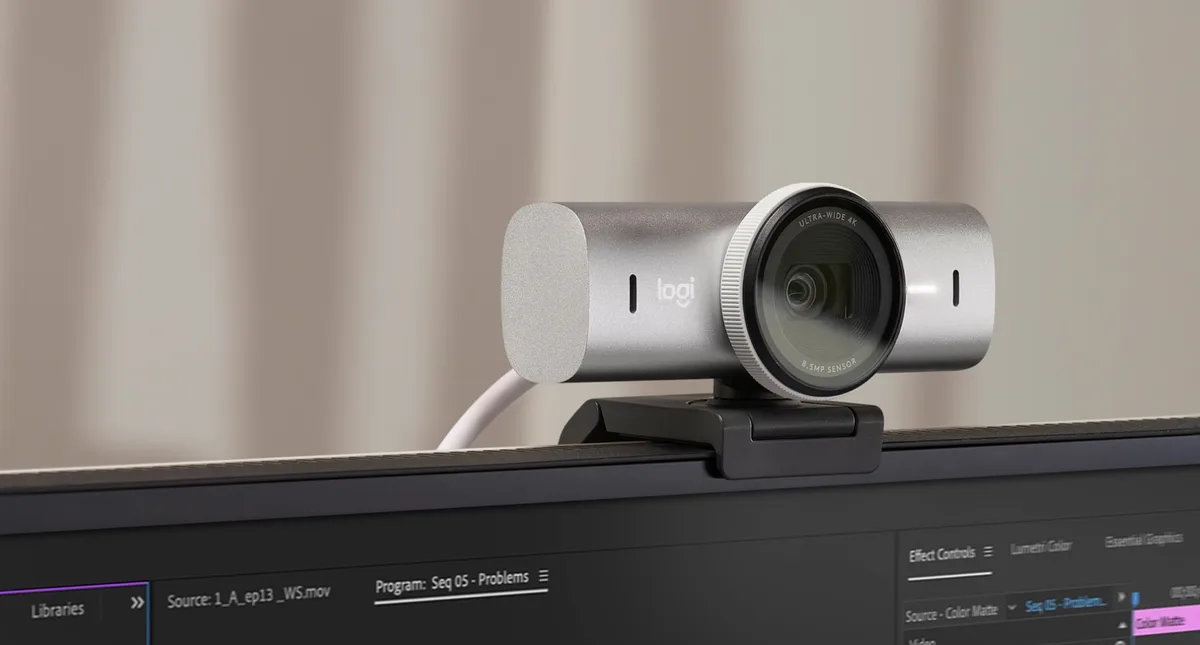
The trick is that the exact steps depend on three things: which app you're using, your operating system, and whether your webcam supports optical zoom at all. As of 2026, most consumer webcams top out at 4x HD digital zoom (the Logitech MX Brio is a common reference), so the rest of this guide walks through every reliable way to tighten your frame without buying new gear.
Quick Answer
Yes, you can zoom in on most webcams. The Zoom desktop app, Windows, macOS, and webcam software all expose a zoom slider.
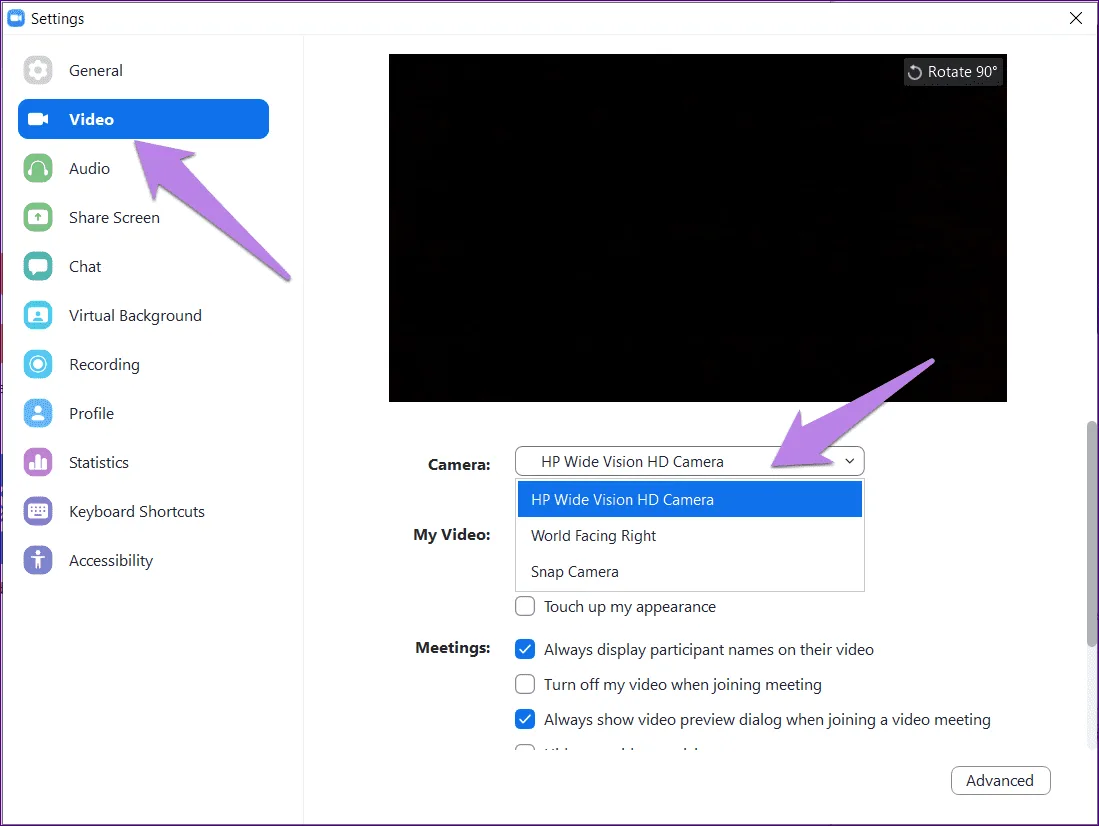
Start with the Zoom desktop client's Settings > Video > Camera tab. Toggle on "HD" and slide the zoom control until your framing is right.
If the slider is greyed out, update your webcam driver or switch to the manufacturer's software for more zoom range.
Why Your Webcam Zoom Isn't Working (Common Triggers)
Before chasing zoom controls, it helps to know why your camera might refuse to zoom at all. In our research, three triggers cover almost every "webcam zoom not working" complaint.
The camera doesn't actually support zoom. Many built-in laptop webcams have fixed-focus lenses with no optical or digital magnification. They pass a raw, un-cropped image to the host app. If that's you, the only zoom path is digital cropping inside software.
The app doesn't expose the zoom slider. Older versions of Zoom hid the slider behind the "HD" toggle. Some browsers grey out digital zoom entirely unless the page is served over HTTPS with camera permissions granted.
Driver or firmware mismatch. Aggregate reviews report that outdated webcam firmware often locks the HD stream at 720p, which then prevents the digital zoom slider from appearing. Manufacturer specs confirm a quick firmware update usually restores it.
If any of those sound familiar, walk through the rest of this guide. The fixes line up roughly in this order: Zoom app first, then OS settings, then manufacturer software, then OBS.
Optical Zoom vs. Digital Zoom vs. Software Cropping
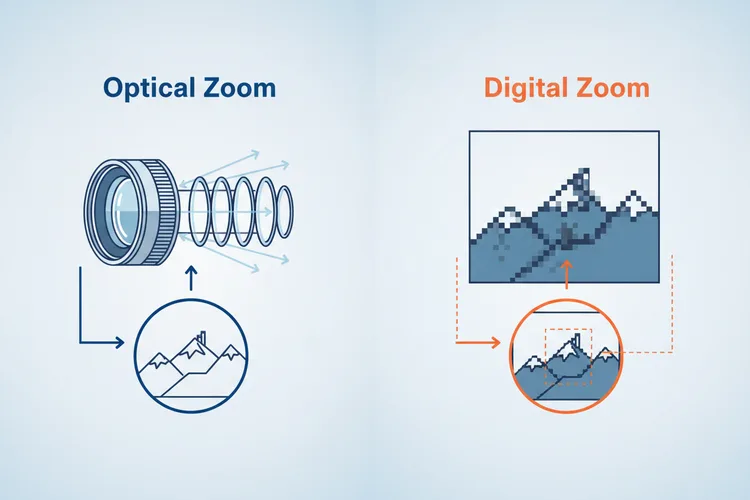
These three words get tossed around like they're the same thing. They aren't, and which one you're using decides how sharp your zoomed-in shot will look.
| Zoom Type | How It Works | Image Quality | Typical Use |
|---|---|---|---|
| Optical zoom | Real lens elements move to magnify the image before it hits the sensor | No quality loss | Premium USB webcams like the Logitech MX Brio |
| Digital zoom | The sensor crops the image and stretches it back to the original resolution | Some loss, especially past 2x | Built-in laptop webcams, most apps |
| Software cropping | A separate program (OBS, ManyCam) re-frames the image after capture | Depends on resolution headroom | Streams, recorded video, virtual cameras |
A quick way to tell which one your camera offers: open the manufacturer app. Logitech's Logi Tune and similar tools list "HD Zoom" only when the lens physically supports it.
If your webcam has only digital zoom, keep the multiplier low. Past 2x on a 1080p sensor you're working with around 540p of real detail, and that gets soft fast.
How to Zoom In on Zoom (Desktop App)
The Zoom desktop client has built-in zoom controls, but they're easy to miss. Here's the clean path that works on Windows and macOS as of 2026.
- Open the Zoom desktop client and sign in.
- Click your profile picture, then choose Settings.
- Click the Video tab on the left.
- Scroll to My Video and find the Camera dropdown.
- Select your webcam if it's not already chosen.
- Toggle HD on (Zoom calls this "Touch up my appearance" for filters, but the HD switch is separate).
- Slide the Zoom control until your framing looks right.
- Close Settings. Your choice is saved per camera.
If the slider is missing, Zoom is hiding it because the camera reports it doesn't support digital zoom. Switching to a different camera in the dropdown, or updating your webcam driver, usually brings it back.
Pro tip: the zoom level you set in Settings sticks to that specific camera. If you plug in a second webcam, you'll need to re-adjust.
How to Zoom In on Your Webcam in Windows 10 and 11
Windows doesn't ship with a "zoom in" button for the camera, but two built-in paths work well.
Using the Windows Camera App
- Press Start, search Camera, and open it.
- Click the chevron in the top-right corner to reveal more controls.
- Choose Settings (the gear icon).
- Slide the Zoom control. The preview updates live.
- Close the Camera app. The next app that uses your webcam will pull the same default framing, but only while the camera is in use.
The Windows Camera app supports digital zoom on most UVC-compliant webcams. If the slider is grey, your driver isn't reporting the zoom range. Update the driver through Device Manager to fix it.
Using the Settings App
- Open Settings > Bluetooth & devices > Cameras.
- Pick your webcam from the list.
- Look for Zoom, Brightness, and Field of view under the preview.
- Adjust as needed.
Windows 11 rolled out richer per-camera controls in 2023, and the field-of-view dropdown is genuinely useful for "zoom" framing without losing resolution.
How to Zoom In on Your Webcam in macOS
macOS hides webcam zoom behind a quirky but reliable path: Photo Booth. Apple hasn't added a system-wide zoom slider to FaceTime, so Photo Booth is still the go-to as of 2026.
- Open Photo Booth from Applications.
- Click the camera icon at the bottom to choose your webcam.
- Click the effects tile (the stack of photos icon) if needed to reveal the preview toolbar.
- Look for the zoom slider on the right side of the window.
- Drag the slider to tighten the frame.
- Close Photo Booth. The next app that opens your webcam will use the same default zoom level until you change it.
This sets a system-wide default, so apps like Zoom, FaceTime, and OBS will all pick up the new framing without extra steps. Photo Booth's zoom is digital, so keep it conservative on lower-resolution webcams.
If you want finer control, the Apple Support page on Mac webcam troubleshooting walks through firmware updates for built-in cameras, which sometimes unlock additional zoom range after a macOS update.
How to Zoom In Using Your Webcam's Own Software (Logi Tune, Dell, Razer, Elgato)
Manufacturer apps give you the deepest zoom control because they can talk directly to the firmware. If your webcam has an HD zoom range beyond what Zoom exposes, the manufacturer's app is where you'll find it.
| Manufacturer | Software | Where Zoom Lives |
|---|---|---|
| Logitech | Logi Tune, Logitech Capture, Camera Settings | Settings > Video > Zoom |
| Dell | Dell Peripheral Manager | Webcam > Zoom |
| Razer | Razer Synapse | Camera > Zoom |
| Elgato | Elgato Camera Hub | Settings > Zoom |
Steps in Logi Tune (representative for most):
- Install Logi Tune from the Logitech support page.
- Open the app and select your webcam.
- Click Settings (the gear icon).
- Find Zoom and drag the slider.
- The setting carries over to other apps while Logi Tune is running in the background.
The MX Brio's 4x HD zoom, for example, is fully reachable only through Logi Tune. The Zoom app itself caps out at 2x digital on most webcams, even when the lens supports more.
How to Zoom In on Your Webcam in Your Browser (Chrome, Firefox, Edge, Safari)
Browser-based video calls (Google Meet, Zoom web client, Slack huddles) can sometimes use your webcam's digital zoom, but only if two conditions are met: the page is served over HTTPS, and you've explicitly granted camera permission.
In Chrome, Edge, and Firefox:
- Visit the site and start or join a call.
- Click the lock icon in the address bar.
- Set Camera to Allow.
- Reload the page if the zoom control inside the call settings is greyed out.
In Safari:
- Open Safari > Settings > Websites > Camera.
- Find the site you're using and set it to Allow.
- Reload the page.
Once permission is granted, browser-based Zoom and Meet both expose a zoom slider inside their video settings. It mirrors the desktop app's slider, so the framing stays consistent if you switch between them.
How to Zoom In on a Webcam in OBS Studio
OBS gives you the most powerful zoom because it crops the image before sending it out as a virtual camera. That's how streamers frame themselves tightly without buying a lens.
- Open OBS and add your webcam as a source (Sources > + > Video Capture Device).
- Right-click the source and choose Filters.
- Add the Crop/Pad filter.
- Increase the Right and Left crop values to zoom in horizontally. Increase Top and Bottom to crop vertically.
- Click Close. The preview updates live.
- To send this zoomed view to Zoom or Meet, start the Virtual Camera (bottom-right of OBS).
OBS doesn't technically "zoom." It just throws away the edges of the frame, which is exactly the same thing optically. The advantage is that you can save multiple named profiles for different camera setups.
Tip: start with small crops. Going past 30% crop on a 1080p source drops you below 720p, which looks soft on big screens.
Decision Guide: Which Zoom Method Should You Use?
Use this quick decision tree to pick the right path the first time.
| Your Situation | Best Method |
|---|---|
| You're only on Zoom calls | Use the Zoom desktop app's built-in zoom slider |
| You want one setting that affects all apps | Use macOS Photo Booth or Windows Camera app defaults |
| Your webcam has more than 2x zoom (Logitech, Razer, Dell) | Use the manufacturer's software to unlock the full range |
| You stream, record, or run a virtual camera | Use OBS Crop/Pad filter for precise framing |
| You're on a browser-only call with no app install | Grant camera permission, then use the site's slider |
If you're still stuck after trying these, the problem is almost always an outdated driver or a camera that doesn't report zoom to the OS. Updating firmware through the manufacturer's app fixes it in nearly every case.
Mistakes That Make Your Webcam Look Worse After Zooming
Even when the zoom slider works, a few common mistakes quickly ruin the result.
- Zooming too far. Digital zoom past 2x on a 1080p webcam starts to look painterly. Keep the multiplier low.
- Forgetting the HD toggle. Zoom defaults to a lower resolution if HD is off, which makes the zoom slider disappear or look choppy.
- Blocking the microphone array. Moving the webcam closer to crop tighter often covers the mic pickup, hurting call audio.
- Lighting drop-off. The tighter the crop, the less light each pixel receives. Add a desk lamp or ring light before zooming past 1.5x.
- Wrong default app. Setting zoom in Photo Booth doesn't always carry to all browsers. Verify in the actual app you'll be using.
A simple fix for most of these: check the lighting first, then zoom second.
Pro Tips for a Sharper, Tighter Frame Without Losing Quality
Manufacturer specs and aggregate user reviews point to the same handful of habits that improve every webcam setup.
- Get physically closer. A 1080p webcam at 2 feet beats a 4K webcam at 6 feet every time. Move the monitor, not the digital crop.
- Use a 60 fps source if available. Higher frame rates let digital zoom look smoother in motion, especially in OBS or ManyCam.
- Match the FOV to the meeting size. A 65-degree FOV is fine for one person. Switch to 78 or 90 degrees only when you need to fit a group or a whiteboard.
- Save presets per app. Most manufacturer apps let you save zoom, pan, and focus presets. Toggle between solo and group framings in one click.
- Update firmware quarterly. Logitech, Razer, and Dell all ship firmware updates that improve zoom range and low-light behavior.
Frequently Asked Questions
Why is the Zoom camera zoom slider greyed out?
The slider is greyed out when Zoom can't access your camera's digital zoom controls. The most common fixes are turning on the HD toggle in Settings > Video, updating your webcam driver in Device Manager, or switching to the webcam manufacturer's app for full zoom range.
Can I zoom in on my laptop's built-in webcam?
Yes, most laptops with UVC-compliant webcams support digital zoom through the Windows Camera app, macOS Photo Booth, or the Zoom app itself. The image quality drops past 1.5x because built-in cameras rarely go above 720p native, so keep the crop modest.
Does digital zoom reduce webcam quality?
Yes. Digital zoom crops the sensor's image and stretches it back to the original resolution, which softens fine detail. Optical zoom doesn't lose quality because the lens magnifies before the sensor captures the image.
Software cropping in OBS has the same effect as digital zoom, since it throws away pixels.
What's the difference between Zoom's zoom and Logitech's zoom?
Zoom's desktop zoom is a digital crop controlled by the app, capped at roughly 2x on most webcams. Logi Tune, Logitech Capture, and Camera Settings talk to the firmware directly, which unlocks the full 4x HD zoom range on supported webcams like the MX Brio. If you need the deepest zoom, the manufacturer's software is the better choice.
How do I zoom in on a webcam in Google Chrome?
Grant the site camera permission through the lock icon in Chrome's address bar, reload the page, then use the zoom slider inside the call's video settings. Browser-based zoom mirrors the same digital zoom slider you'd see in the desktop app, but only when permission is granted and the page is loaded over HTTPS.