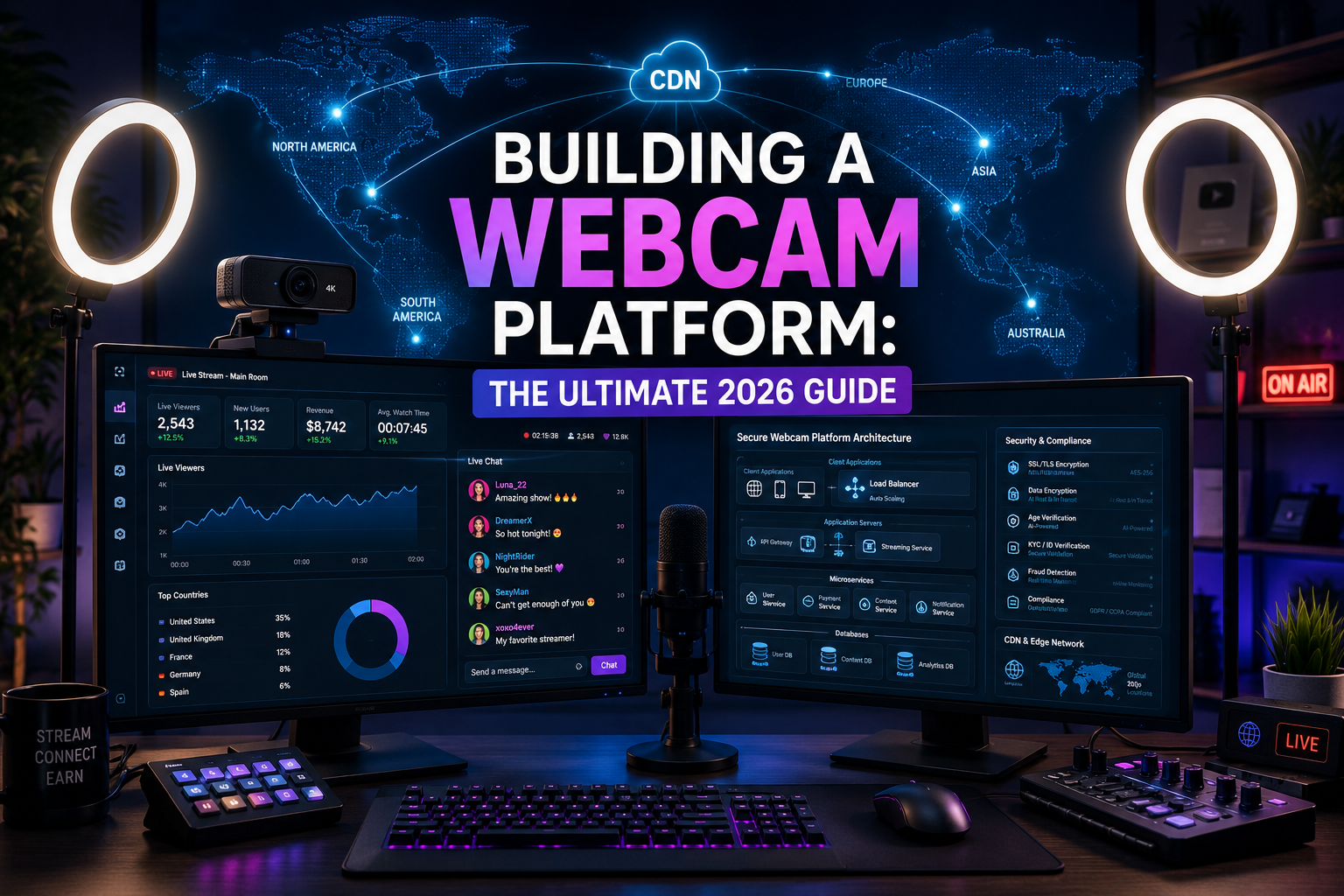
Building a successful webcam site in 2026 involves more than just setting up a camera; it requires a strategic blend of technology, legal compliance, user experience design, and effective monetization strategies. This comprehensive guide will walk you through every critical step, from initial concept to launching and scaling your live streaming platform, ensuring it stands out in a competitive digital landscape.
Creating a live webcam site provides a direct pathway to connect with an audience through real-time video content. Whether for entertainment, education, or community building, a well-executed platform offers significant opportunities for engagement and revenue.
This guide offers practical expertise for entrepreneurs, developers, and creators aiming to launch and grow their live streaming ventures.
Understanding Your Webcam Site Vision and Niche
Before any technical development, define the core purpose and target audience for your webcam site. Clarity on your vision ensures all subsequent decisions align with your business goals.
Defining Your Target Audience and Content
Identifying your ideal viewer is the first crucial step for a successful live streaming platform. Consider demographics, interests, and their preferred content formats. This helps tailor your content strategy to resonate deeply with specific user groups.
Your content niche could range from educational workshops, gaming streams, fitness classes, or nature observation, to more personal entertainment. A clear content focus attracts a dedicated audience and differentiates your platform.
Exploring Different Webcam Site Models
Webcam sites can adopt various operational and monetization models. You might choose a subscription-based platform, a pay-per-view model, or a hybrid approach.
Some platforms focus on individual creators, while others build a community around a central theme or brand. Understanding these models helps select the best fit for your content and business objectives.
| Model Type | Description | Benefits | Considerations |
|---|---|---|---|
| Subscription | Users pay a recurring fee for unlimited access or exclusive content. | Predictable recurring revenue, builds loyalty. | Requires consistent, high-quality content. |
| Pay-Per-View (PPV) | Users pay for individual live streams, private shows, or content clips. | High earning potential per transaction, flexible content offerings. | Revenue can be inconsistent, requires continuous promotion. |
| Freemium | Offers basic content for free, with premium features or content for a fee. | Attracts a broad audience, converts free users to paying customers. | Balancing free and paid content is critical. |
| Tip/Donation Based | Viewers voluntarily tip creators during live streams. | Direct audience support, fosters community interaction. | Income can be highly variable, relies on audience generosity. |
Legal and Ethical Considerations from Day One
Operating a webcam site in the United States requires strict adherence to federal, state, and local laws. This includes privacy regulations, content guidelines, and age verification.
Compliance with regulations like COPPA (Children’s Online Privacy Protection Act) is essential, especially for general audience platforms, to prevent minors from accessing the platform or collecting their data.
For adult-oriented webcam sites, federal laws like 18 U.S.C. § 2257 mandate record-keeping for performer age and identity verification. Many states also have specific age verification laws for adult content.
Consulting a legal expert specializing in online content and streaming is highly recommended to navigate these complex requirements. Proper legal counsel helps prevent fines, penalties, or site shutdowns.
Essential Technical Infrastructure for Your Webcam Site
A robust technical foundation is critical for delivering a high-quality live streaming experience. This involves selecting appropriate hardware, software, and networking solutions.
Choosing Your Live Streaming Technology
Modern live streaming relies on various protocols and software. Key technologies include RTMP (Real-Time Messaging Protocol), HLS (HTTP Live Streaming), DASH (Dynamic Adaptive Streaming over HTTP), and WebRTC (Web Real-Time Communication).
RTMP is commonly used for ingesting streams from encoders, while HLS and DASH are widely adopted for delivering adaptive bitrate streams to viewers. WebRTC offers low-latency, peer-to-peer communication ideal for interactive sessions.
Popular streaming software like OBS Studio, Streamlabs Desktop, and vMix provide robust tools for capturing, encoding, and broadcasting live video. OBS Studio is a free, open-source choice known for its customization.
Cloud-based streaming solutions such as StreamYard and Restream simplify the broadcasting process, offering features like multi-streaming and browser-based interfaces.
Selecting Webcams and Capture Hardware
High-quality video production starts with reliable webcams and capture devices. Opt for cameras offering at least 1080p resolution for clear visuals.
Professional lighting equipment significantly improves video quality, making your stream more appealing. A clear, noise-canceling microphone ensures excellent audio, which is crucial for viewer engagement.
For outdoor or surveillance-focused webcam sites, IP cameras (security cameras) are durable and perform well in various weather conditions. Ensure all hardware has necessary drivers and is configured correctly with your streaming software.
Server and Hosting Solutions for Streaming
Live streaming requires powerful servers capable of handling high bandwidth and numerous concurrent connections. Dedicated servers or specialized video hosting solutions are often necessary.
Key server requirements include a multi-core CPU (e.g., Intel Xeon or Ryzen with at least eight cores), ample RAM (around 1GB per concurrent viewer for optimal performance), and fast SSD storage for efficient data retrieval.
Bandwidth is paramount; a 1080p stream requires 5-8 Mbps per viewer, while 4K streaming demands 20-35 Mbps. You will need gigabit (1Gbps) or even 10Gbps connectivity for larger audiences.
Carefully calculate your bandwidth needs by multiplying your stream’s bitrate by the number of expected concurrent viewers, then add a 20-30% safety margin. This prevents buffering and ensures smooth delivery.
Content Delivery Networks (CDNs) for Global Reach
A Content Delivery Network (CDN) is essential for delivering live video streams efficiently to a geographically dispersed audience. CDNs distribute content from edge servers located closer to viewers, reducing latency and improving playback quality.
Providers like Cloudflare Stream, Wowza, and Mux offer specialized video CDN services. Pricing models often involve usage-based billing, such as per minute stored and per minute delivered.
For example, Cloudflare Stream charges $5 per 1,000 minutes stored and $1 per 1,000 minutes delivered. CDNsun offers a pay-as-you-go model with competitive rates for North America.
Utilizing a multi-CDN strategy can further enhance reliability and performance by steering viewers to the fastest available network.
Building Your Website: Platforms and Custom Development
You have options for building the website itself: using a ready-made platform, a white-label solution, or custom development. Ready-to-use platforms or white-label scripts like xCams by Adent offer quick deployment and lower initial costs.
Custom development provides maximum flexibility and unique features but requires significant time, budget, and coding expertise. Platforms like WordPress, combined with specific themes and plugins, can also be adapted for live streaming.
Consider AI-powered website builders, such as Meku.dev, which can generate structured video platforms with live and on-demand content features. Regardless of the approach, ensure your site supports secure payment gateways, especially for high-risk transactions.
Crafting a Compelling User Experience (UX)
A positive user experience keeps viewers engaged and encourages repeat visits. Focus on intuitive design and interactive features.
Intuitive Interface Design for Live Video
Your webcam site’s interface should be clean, easy to navigate, and visually appealing. Viewers must quickly find live streams, browse content, and interact seamlessly. Prioritize clear calls to action and minimal distractions.
Ensure the video player is prominent and functions flawlessly across various devices. An intuitive layout enhances accessibility and reduces user frustration.
Interactive Features for Engagement
Live streaming thrives on real-time interaction. Implement live chat functionalities that allow viewers to communicate with creators and each other.
Features like virtual gifts, polls, Q&A sessions, and direct messaging enhance user engagement. These interactive elements foster a sense of community and connection, encouraging longer viewing times.
Mobile-First Design for All Devices
A significant portion of internet traffic comes from mobile devices. Your webcam site must offer a responsive design that adapts flawlessly to smartphones and tablets. Optimize stream quality and interface elements for smaller screens to ensure a consistent experience.
Monetization Strategies for Webcam Sites
Generating revenue is a primary goal for many webcam site operators. Diversifying your monetization methods maximizes earning potential.
Subscription Models and Memberships
Subscription plans offer a stable, recurring revenue stream. You can provide exclusive content, ad-free viewing, or special access tiers for paying members.
Tiered subscriptions allow users to choose different levels of access and benefits. This caters to various audience segments, from casual viewers to dedicated fans.
Pay-Per-View and Token-Based Systems
Offer individual live shows, private sessions, or pre-recorded content for a one-time fee. This model is highly effective for premium or exclusive content.
Token-based systems allow users to purchase virtual currency to unlock content or send tips. This simplifies microtransactions and encourages spending within the platform.
Advertising and Sponsorships
Displaying ads on your platform can generate revenue, especially with high traffic volumes. Consider direct sponsorships from brands relevant to your content niche.
Affiliate marketing, where you promote products or services and earn a commission, also offers a supplementary income stream. Target advertising geographically and by device for better engagement.
Virtual Gifts and Tipping
Allow viewers to send virtual gifts or tips to creators during live streams. This direct support model fosters strong creator-audience relationships.
Implementing leaderboards or special recognition for top tippers can encourage more donations. Creators often keep a significant portion of these earnings.
Security, Privacy, and Compliance
Protecting user data and ensuring a safe environment are paramount for building trust and maintaining legal standing.
Protecting Your Users and Data
Implement robust cybersecurity measures, including SSL encryption for all data transmission and secure user authentication. Protect personal information, financial data, and content from breaches.
Regular security audits and updates are essential to safeguard your platform against evolving threats. Users must feel confident their data is safe.
Content Moderation and Safety Protocols
Establish clear content guidelines and enforce them rigorously. Implement automated and human moderation systems to detect and remove inappropriate content.
Provide tools for users to report violations easily. Prioritize user safety through strict anti-harassment and privacy policies.
Age Verification and Identity Management
Age verification is a critical compliance requirement, particularly for age-restricted content. Many U.S. states have laws requiring platforms to verify user ages.
Reputable age verification software can confirm users are of legal age, often by checking government-issued IDs or transactional data. For adult content, federal law mandates identity verification for performers.
California’s “Protecting Our Kids from Social Media Addiction Act” requires age verification by December 31, 2026, for platforms to exclude users under 18 from “addictive feeds” without parental consent. Other states like Arkansas and Georgia also have specific age verification requirements for minors.
Copyright and DMCA Compliance
Implement a clear Digital Millennium Copyright Act (DMCA) policy. This protects intellectual property and provides a framework for handling copyright infringement claims.
Ensure all content creators understand and adhere to copyright laws. Promptly address any infringement notices to maintain legal compliance.
Marketing Your Webcam Site for Growth
Once your platform is live, effective marketing strategies are crucial for attracting and retaining users.
Search Engine Optimization (SEO) for Visibility
Optimize your website content, meta descriptions, and technical structure for relevant keywords. This helps your site rank higher in search engine results.
Create high-quality, engaging content that naturally incorporates primary and secondary keywords, attracting organic traffic. Consistent SEO efforts improve visibility over time.
Social Media Promotion and Community Building
Leverage platforms like Facebook, Instagram, TikTok, and X (formerly Twitter) to promote your live streams and engage with your audience. Share snippets, schedules, and behind-the-scenes content.
Build a strong community around your brand through consistent interaction and exclusive social media content. This fosters loyalty and drives traffic to your site.
Affiliate Programs and Influencer Marketing
Partner with affiliates or influencers who can promote your webcam site to their existing audiences. This expands your reach and drives targeted traffic.
Offer attractive commission structures to motivate affiliates. Influencer collaborations can significantly boost brand awareness and user acquisition.
Paid Advertising Campaigns
Consider paid advertising on search engines and social media platforms. Targeted ads can quickly reach potential users interested in your content niche.
Experiment with different ad formats and audience targeting to optimize your campaigns. Monitor performance metrics closely to ensure a positive return on investment.
Scaling and Maintaining Your Platform
As your webcam site grows, planning for scalability and ongoing maintenance is vital for long-term success.
Monitoring Performance and User Feedback
Continuously monitor your site’s performance, including stream quality, loading times, and server capacity. Use analytics tools to track user engagement and identify areas for improvement.
Actively solicit and respond to user feedback. Regular communication helps address issues promptly and enhances the user experience. This also informs future content and feature development.
Handling Increased Traffic and Bandwidth
Prepare your infrastructure to handle sudden spikes in traffic and increased bandwidth demands. A robust CDN and scalable server architecture are crucial. Over-provisioning bandwidth slightly offers a safety margin.
Implement adaptive bitrate streaming to deliver optimal video quality based on each viewer’s internet connection. This prevents buffering for users with slower speeds.
Regular Updates and Security Patches
Keep all software, platforms, and security systems updated. Regular patches protect your site from vulnerabilities and ensure smooth operation. Proactive maintenance prevents major disruptions.
FAQ
What is the estimated cost to start a webcam site?
Startup costs for a webcam site can range from $2,000 to $10,000, depending on your chosen platform and level of custom development. Custom-built sites can exceed $25,000.
Do I need coding skills to create a webcam site?
Not necessarily. You can use ready-made platforms, white-label solutions, or website builders that require no coding. Custom development, however, demands strong coding expertise.
What are the legal requirements for age verification in the US?
While there’s no federal law, many U.S. states have enacted laws requiring age verification for access to age-restricted content. This often involves verifying users are 18 or older using government IDs or transactional data.
How can I monetize my webcam site effectively?
Effective monetization strategies include subscription models, pay-per-view content, virtual gifts, tipping, and advertising. Diversifying revenue streams maximizes earning potential.
What bandwidth is required for live streaming in 1080p?
For 1080p live streaming, you will typically need 5 to 8 Mbps per stream. For many concurrent viewers, gigabit or even 10Gbps internet connectivity is essential to prevent buffering.
Conclusion
Creating a successful webcam site involves careful planning across technical, legal, and business domains. Defining your niche, building a robust streaming infrastructure, prioritizing user experience, and implementing diverse monetization strategies are key pillars. Adhering to legal requirements, especially age verification and data privacy, builds trust and ensures longevity. Continuous marketing and platform maintenance are vital for sustained growth in the dynamic live streaming industry. By focusing on these elements, you can launch a thriving and engaging live streaming platform in 2026.